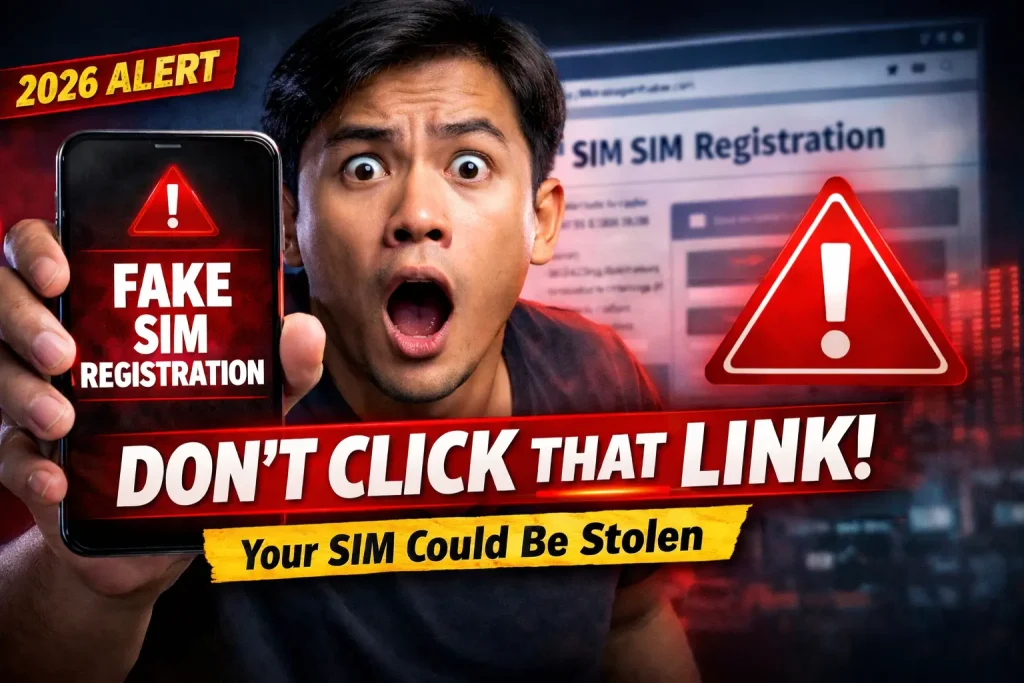
You receive a message saying your SIM will be blocked unless you register again through a link. The page looks real, the logo matches your telecom provider, and the warning feels urgent. Many users panic, click, and unknowingly submit personal details to a Fake SIM Registration site.
If you’ve ever felt unsure whether a SIM registration link is official or a scam, you’re not alone. This article explains how these scams work, how to spot warning signs immediately, and the exact steps you can take to protect your mobile number, personal data, and online accounts.
What Is Fake SIM Registration and Why Is It Dangerous
A Fake SIM Registration scheme tricks users into submitting personal details on unauthorized websites. These pages copy official telecom portals. They display company logos, registration forms, and even fake confirmation screens.
Scammers target mobile subscribers because SIM cards link to banking apps, e-wallets, and two-factor authentication codes. When criminals collect your full name, address, government-issued ID, and mobile number, they gain tools to commit identity theft.
According to warnings issued by the National Telecommunications Commission and major telecom providers like Smart and Globe, users must register only through official portals. Criminal groups exploit public deadlines and legal requirements to create urgency.
How Fake SIM Registration Links Spread in 2026
SMS and Messaging App Scams
Most Fake SIM Registration attacks start with a text message. The message says your SIM will face suspension unless you verify immediately. It includes a short link that looks official but leads to a phishing page.
These messages use fear and time pressure. They often mention service suspension, SIM blocking, or legal penalties. The goal remains simple. Make you click fast without thinking.
Social Media and Sponsored Posts
Scammers also run ads on social media platforms. They promote fake registration assistance pages. Some posts claim they help users bypass errors or extend deadlines. These pages collect ID images and personal data.
Always check whether the link leads to the official domain of your telecom provider. Fraud pages usually contain slight spelling errors or unusual web addresses.
Warning Signs of Fake SIM Registration Websites
You can identify Fake SIM Registration pages if you know what to check. First, examine the website address. Official telecom sites use secure HTTPS connections and verified domains.
Second, look for poor design details. Scam pages often load slowly, contain grammar mistakes, or redirect multiple times. Real registration portals provide clear privacy policies and company contact information.
Third, watch for requests that seem excessive. Official SIM registration asks for identity verification details only once. Fraud sites sometimes demand banking passwords, one-time PIN codes, or extra payments.
If a page pressures you with countdown timers or repeated warning pop-ups, leave immediately.
How to Protect Yourself from Fake SIM Registration
Start with one rule. Never click links from random messages. Instead, type your telecom provider’s official website directly into your browser.
Keep your mobile operating system updated. Security updates block many phishing attempts. Use two-factor authentication on important accounts, especially online banking and e-wallet apps.
When you receive a suspicious message, report it to your network provider. Telecom companies cooperate with regulatory authorities to shut down scam operations. Early reporting helps protect other users.
Teach family members about these risks. Older adults and students often fall victim because they fear losing service.
What To Do If You Already Entered Details on a Fake SIM Registration Page
If you suspect you used a Fake SIM Registration site, act quickly. Contact your telecom provider and inform them. Request immediate monitoring of your account.
Change passwords for email, banking, and social apps linked to your number. If scammers accessed your SIM, they may try SIM swap fraud.
Report the incident to the National Telecommunications Commission or the Cybercrime Investigation and Coordinating Center. Filing a report creates a legal record and helps authorities trace patterns.
Monitor your bank accounts and e-wallet transactions closely. Fast action reduces financial damage.
Why Official SIM Registration Matters
Governments introduced SIM registration laws to reduce fraud and improve digital security. Proper registration strengthens national security and public safety. However, criminals exploit these rules to build Fake SIM Registration schemes that target worried users.
Understanding the difference between official portals and scam sites protects your identity. Trust only verified telecom domains and never share sensitive data through third-party platforms.
The Future of Fake SIM Registration Threats
Technology improves each year. So do scams. In 2026, attackers use better website designs and AI-generated messages to look real. Still, simple checks protect you.
Verify the domain. Confirm through official customer service. Avoid urgent links. These habits keep your SIM active and your data secure.
A few minutes of caution can prevent months of recovery.
Scammers rely on fear and confusion. They create realistic pages and urgent messages to trap users. By understanding how Fake SIM Registration works and recognizing warning signs, you take control of your security.
Your mobile number connects to your identity, your finances, and your daily life. Protect it carefully.